
"Try." The scariest word I heard all week.
Punishing mistakes teaches students to fear trying, the opposite of what education is supposed to do.
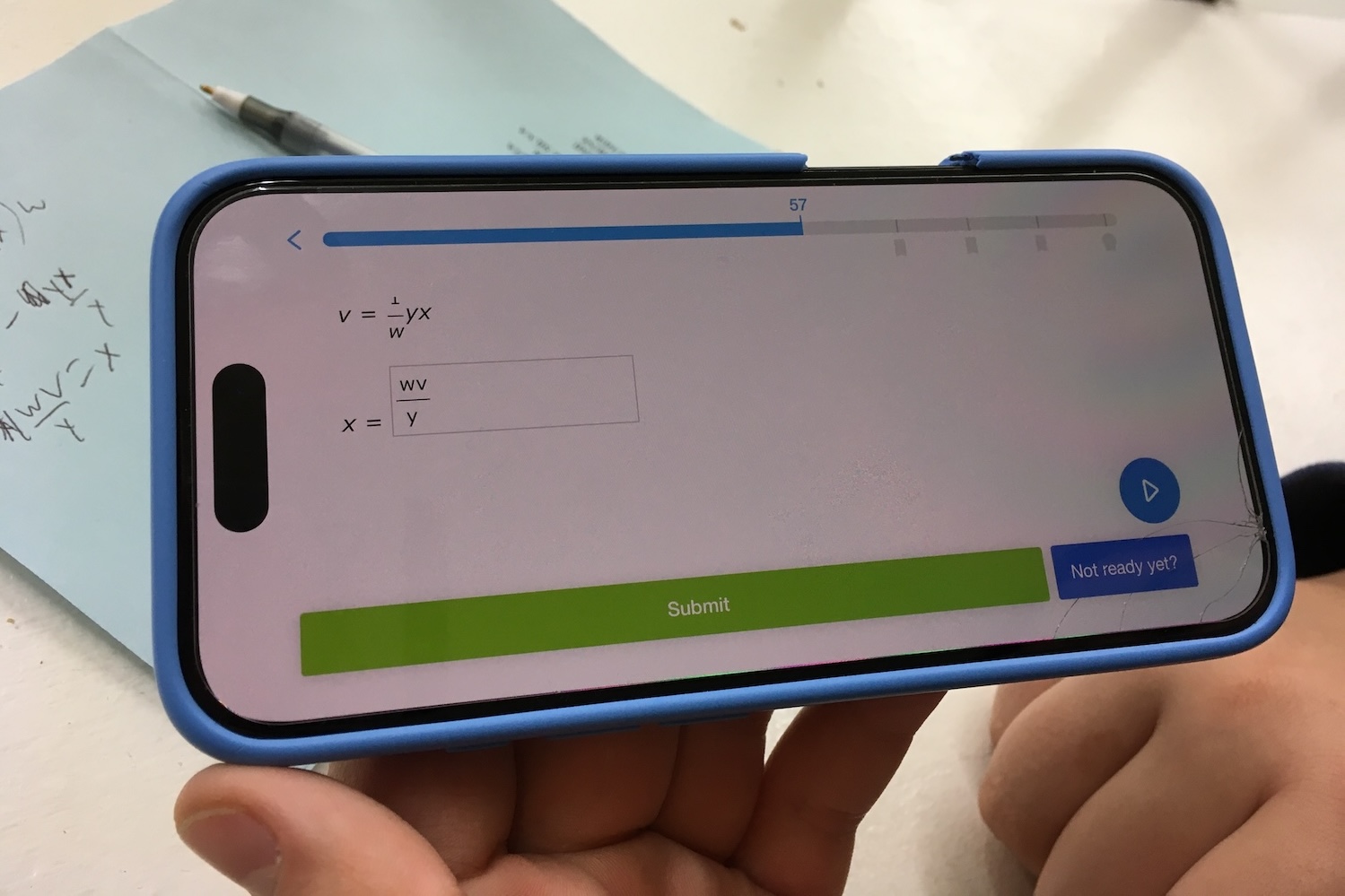


That’s what an 8th grader recently said to me.
She wasn’t being dramatic. I had been helping her with math. We were sitting at the table with a piece of paper, working through problems together. She understood them. She reasoned through them with ease. She got them right.
So at the next juncture of the problem, I said, naturally, "Let’s try it."
She froze.
"Try. The scariest word I heard all week." She physically shuddered when she said it. Then she explained why.
Her homework was on IXL. Like many math practice tools, it uses a green progress bar to show how far you’ve advanced. When you answer correctly, the bar grows a little. When you answer incorrectly, it shrinks. And it shrinks more than it grows.
Her words were precise. It punishes you more for getting something wrong than it rewards you for getting something right. That was her understanding from her interactions with the app.
"It's chungus!" she moped.
With this design, every attempt carries risk.
Every mistake erases visible progress.
Every wrong answer moves you backward.
Over time, she learned the rational response. Do not try unless you are certain. Avoid risk. Protect your progress.
This was not a disengaged student. She was motivated. Capable. She could do math just fine. We had just proven it on paper.
But the system had trained her to fear the act of trying.This is a design decision. And it has consequences.
One of the most important outcomes of education is resilience. The ability to attempt something uncertain. To struggle. To be wrong. To recover. To continue. Learning requires mistakes.
But when the primary feedback mechanism punishes mistakes by visibly taking something away, students internalize a different lesson. Progress is fragile. Mistakes are dangerous. Trying is risky.
So they avoid trying.
Contrast this with Duolingo. Its progress indicators never move backward. You can make mistakes, but your overall sense of advancement remains intact. The system reinforces effort and persistence.This is not accidental. It reflects an understanding about what successful learning feels like.
Educational tools do more than measure learning. They shape behavior. They shape emotion. They even shape identity.
In this case, the system taught a capable 8th grader to associate trying with loss. How backwards is that!
Education should make students more willing to try, more resilient, more curious not more cautious.
If a student hears the word 'try' and feels fear instead of possibility, something in the system is broken.
It is our responsibility to fix it.
