
No Column for Your Kid
I was a first-year teacher clicking one grade box at a time at 1am. I assumed schools had bad software because schools had no money. Then I found out what our website cost.

It started with an edtech gradebook that couldn’t copy-paste.
Where this started
I was a first-year math teacher on the West Side of Chicago. It was, by the numbers, one of the most dangerous zip codes in the city. My homeroom kids were robbed for their shoes walking to school. That is not a metaphor.
I want to tell you two things about that school that are both true.
First, it was the hardest work I have ever done or will ever do. Hundred-hour weeks. Up at 1am, roommates asleep, building the next day’s lessons from nothing, then rebuilding it after it didn’t work. Emotionally, physically, mentally spent, all the time.
Second, it was a magical place. The kids were extraordinary. They were sharp and funny. They wanted to be there. The teachers were the most committed people I have ever stood next to. I can still see those hallways, and my classrooms. I would not trade a day of it. If I could go back, the only thing I’d change is that I’d want to be more effective, sooner, for my students.
And here is the smallest, stupidest detail from that year. It’s also the reason you’re reading this.
The gradebook.
The school had bought it from a company. To enter grades you clicked a box, typed, clicked the next box, typed. No pasting. Couldn’t even hit tab. I had come from consulting, where I lived in Excel; I’d been in college when Google Docs and Sheets launched. I had already built education-facing products for fun. I knew what software should be. And at 1am, one hundred thirty kids, five assignments, I was clicking boxes.
Money wasn’t the reason
I assumed schools had bad software because schools had no money. Then I learned what our website cost.
It was a few static pages. Nothing a parent or student could do with it. It cost the school between twenty and thirty thousand dollars... in 2009.
The man who bought it was an assistant principal. He was a good guy and a dedicated colleague. He was not the problem. He was handed a decision he had no way to make well, with no time, no expertise, and only the vendors who bothered to show up. He was set up to fail. And teachers like me, who didn’t understand any of that yet, quietly held it against him.
That was the moment the problem stopped looking like a money problem and started looking like a market problem. The money was there. It was flowing to the wrong things, chosen by good people with the wrong information.
What I believe
I have come to believe something that sounds obvious and isn’t: teachers should have the best tools in the world.
Not adequate. Not “good for education.” The best. It is the hardest job there is, done in front of a live audience, all day, with stakes that don’t reset. Surgeons get tools that assume they are surgeons. Astronauts get tools that assume they are astronauts. Teachers got a gradebook that assumed they had all night long.
The technology to do better existed in 2008. It exists overwhelmingly now. So the question is not whether we can build tools that make teachers feel like superheroes. It’s why the market doesn’t.
What’s actually wrong: the incentives
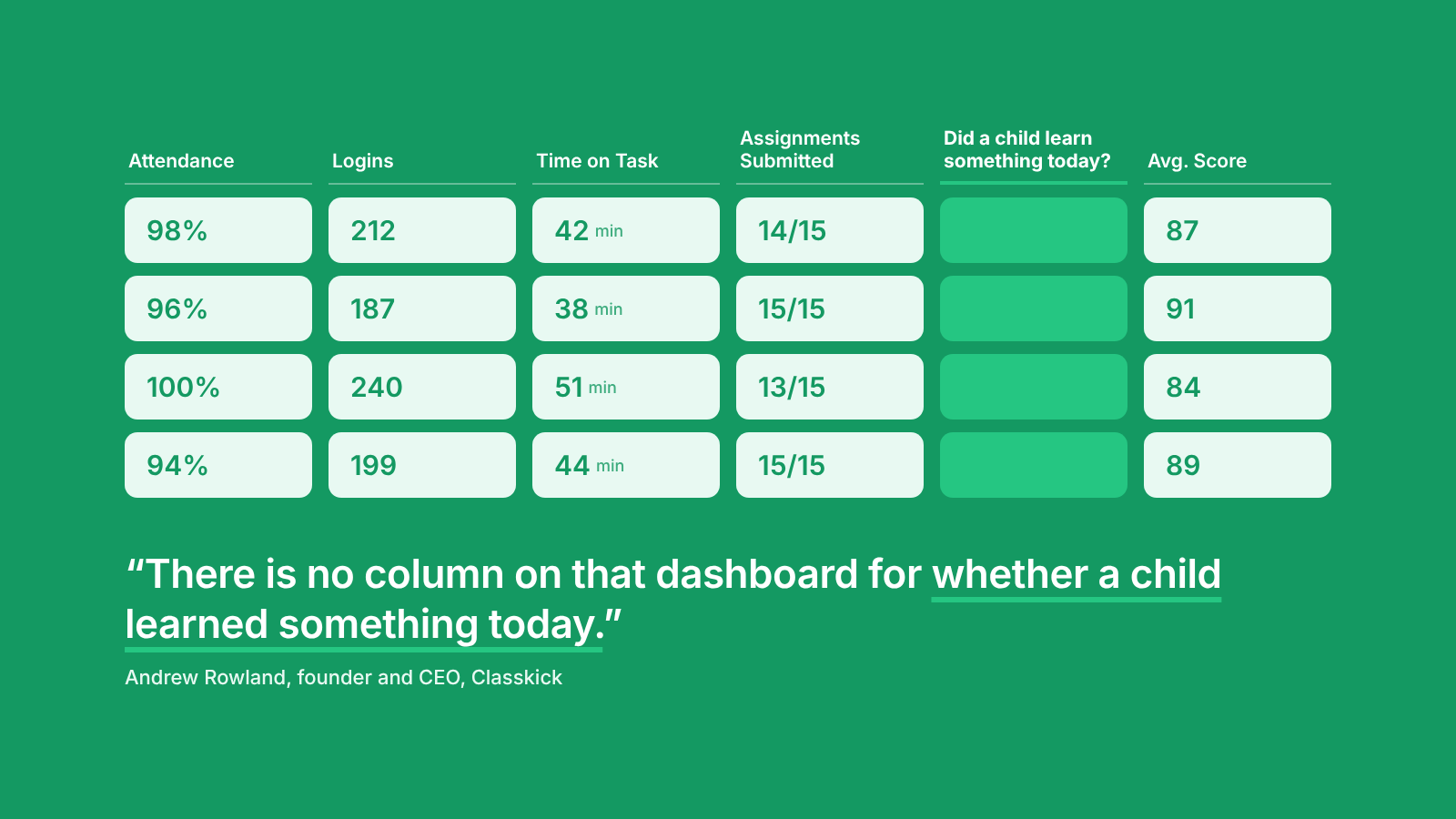
Over the past fifteen years the biggest technology companies in the world moved into American classrooms. They did it quietly and competently. I do not think the people who work there want to hurt kids. But somewhere in one of those buildings is a smart, well-meaning engineer whose bonus depends on minutes, devices, and growth. They will hit those numbers. Nobody will ask them about anything else.
There is no column on that dashboard for whether a child learned something today.
And these are the companies deciding what a classroom looks like now. Which device is on the desk. Which app opens by default. What “free” comes bundled with. The people setting the agenda for your kid’s school day are the people whose dashboard doesn’t have a column for your kid.
It’s the assistant principal’s problem again, at national scale. Good people, wrong measuring stick.
It matters more than it looks
Here is what outsiders miss about teachers: they will absorb almost any cost as long as the kids are learning. That is the private deal many teachers make. The hours, the pay, the lack of respect, the gradebook. All of it is bearable, if the students are growing.
Which means bad tools don’t really hurt the teacher. She just stays up later. They hurt the kids, who had her for an hour a day and got a little less of her. They are the one party in the whole arrangement who never got a vote.
That’s the part I could not let go of.
The deal
It’s possible to build tools for teachers that work. So we did. Classkick shows a teacher every student’s work as it happens. She can be in 30 places at once, and help the one who’s stuck before the moment passes.
I’m not going to list features here. I want to describe the deal, because the deal is the point.
We do not get paid for engagement. Ad platforms like TikTok and Instagram make more money the longer a student looks at the screen. We make money when teachers use Classkick, decide it makes their hour better, and their schools choose to keep it. If it doesn’t, they leave. Our incentives and theirs point the same direction, and I would not run this company any other way.
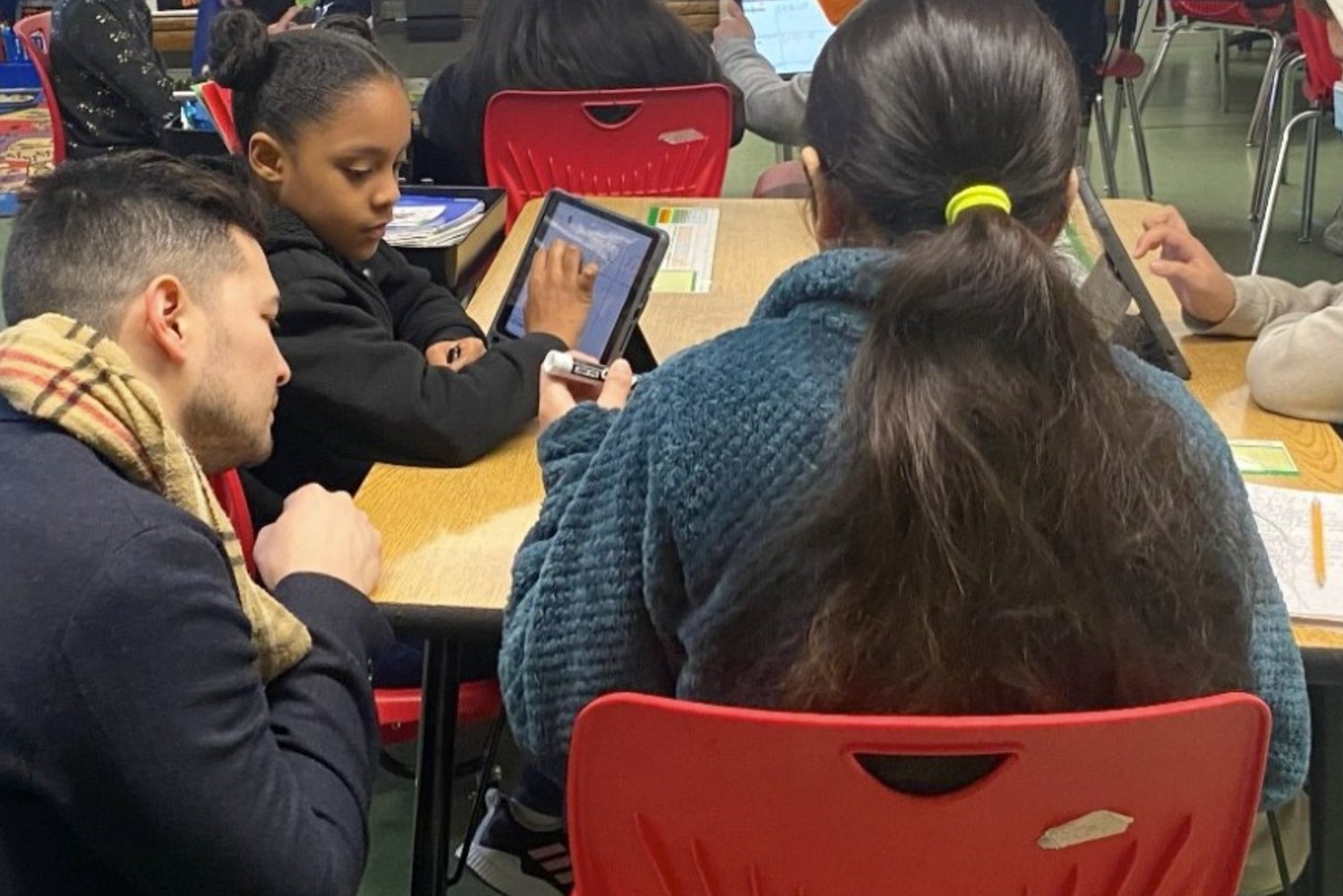
I interview teachers every few days. We go to classrooms every month. Not dashboards, not surveys. Sitting in the back of a real room on a real Tuesday, watching what a teacher actually does with the thing. Almost everything we’ve gotten right came out of those rooms.
What we can’t measure
We cannot yet measure learning rigorously. No one can, whatever the commissioned white papers say. What we can measure is whether teachers, who are the most ruthless judges of wasted time I have ever met, keep choosing to spend their one hour with us. It’s a proxy. I would rather name the proxy than pretend the dashboard shows something it doesn’t.
Why I’m still here
Somewhere tonight a first-year teacher is up at 1am. Tomorrow her kids will make a dangerous walk to school that nobody’s kid should have to make. And then they’ll have her for an hour.
I started Classkick so that hour could be entirely hers and theirs. Not most of it. All of it.
That’s still the job. Thanks for being part of it.
If you teach, you can try it in your own classroom: sign up for Classkick free.
Andrew
(Mr. Roro to my former students)

Andrew Harada Rowland

Former Teacher, Classkick Founder & CEO

Classkick